Deploying advanced automated hardware designed to accelerate cargo throughput and customs processing in the Maseru and Lesotho cross-border shipping lanes.
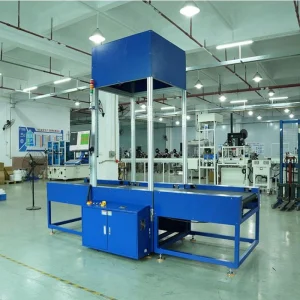
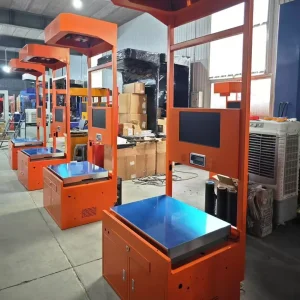
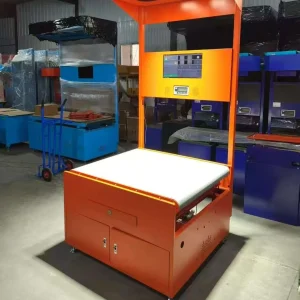
Analyzing regional bottlenecks, trade corridors, and the technological shift toward automation.
The Kingdom of Lesotho, geographically landlocked and completely surrounded by South Africa, faces a highly specialized set of logistics challenges. With primary trade corridors connecting Maseru, Maputsoe, and other industrial clusters to international shipping ports such as Durban, the reliance on friction-free cross-border operations is critical. Historically, border posts have been characterized by operational delays, complex manual compliance screening, and cargo verification bottlenecks.
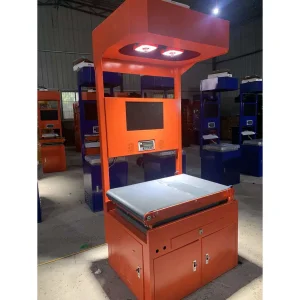
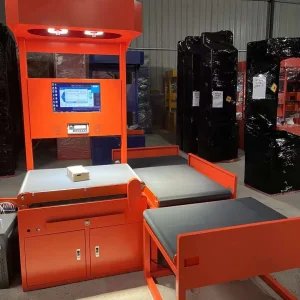
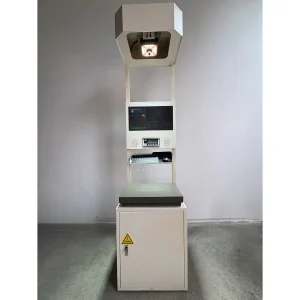
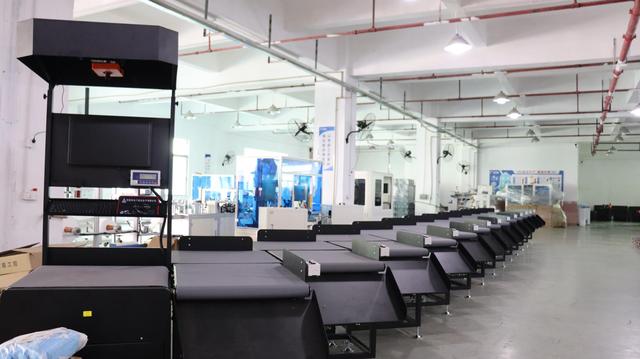
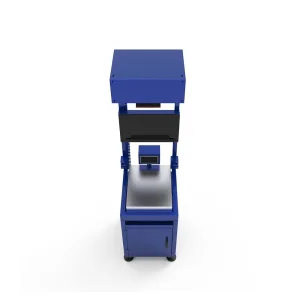
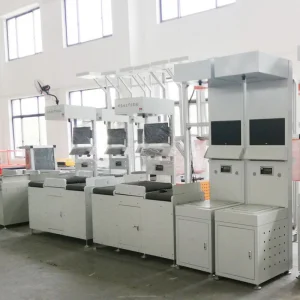
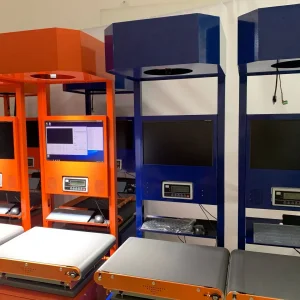
As the Southern African Customs Union (SACU) drives regional trade integration, there is a rapidly escalating requirement for high-throughput, automated scanning and cargo sorting frameworks. To bypass structural transit delays, modern logistics providers in Lesotho are transitioning from labor-intensive manual inspections to digitized Dimension-Weighing-Scanning (DWS) Systems. This technological evolution allows real-time data flow, directly feeding regional customs platforms and reducing transit dwell times from several days to mere minutes.
Lesotho's industrial landscape is heavily anchored by the textile manufacturing sector, primarily concentrated in the Maseru and Thetsane industrial zones. High-volume exports destined for the United States under the AGOA framework, alongside growing intra-African trade, mandate highly efficient warehouse supply chain setups. Furthermore, the post-pandemic surge in cross-border e-commerce demands instant processing of high-frequency, low-weight parcel segments.
In this local ecosystem, automated sorting systems integrated with dynamic barcode verification provide immediate ROI. When regional express companies process imports or domestic distributions within Maseru, systems that can automatically scan, weigh, and profile package dimensions become the cornerstone of profitability. Deploying these units at local terminals guarantees accurate tracking and billing, eliminating discrepancies between regional freight forwarders and international couriers.
Partnering with Shenzhen StudioWare Logistics Co., Ltd. for end-to-end global supply chain services.
Shenzhen StudioWare Logistics Co., Ltd. is a professional international logistics and supply chain service provider specializing in cross-border logistics, express delivery services, air freight, sea freight, and global supply chain solutions. The company is committed to offering efficient, reliable, and cost-effective transportation services for global trade between China and international markets.
With a strong global logistics network, StudioWare Logistics provides end-to-end shipping solutions including pickup, warehousing, customs clearance, freight forwarding, and last-mile delivery. Its services cover a wide range of international routes, supporting e-commerce businesses, manufacturers, and trading companies with stable and scalable logistics operations.
The company integrates modern logistics management systems with real-time tracking technology to ensure transparency, shipment visibility, and timely delivery performance. By optimizing transportation routes and combining air, sea, and multimodal logistics options, Shenzhen StudioWare Logistics helps clients reduce shipping costs while improving delivery efficiency.
Shenzhen StudioWare Logistics Co., Ltd. also offers customized supply chain solutions tailored to different industries and cargo requirements, including time-sensitive shipments, bulk freight, and cross-border e-commerce logistics.
Driven by globalization and digital logistics innovation, the company aims to become a trusted global logistics partner, connecting China with key international markets such as North America, Europe, Asia-Pacific, and emerging economies through high-quality cross-border transportation services.
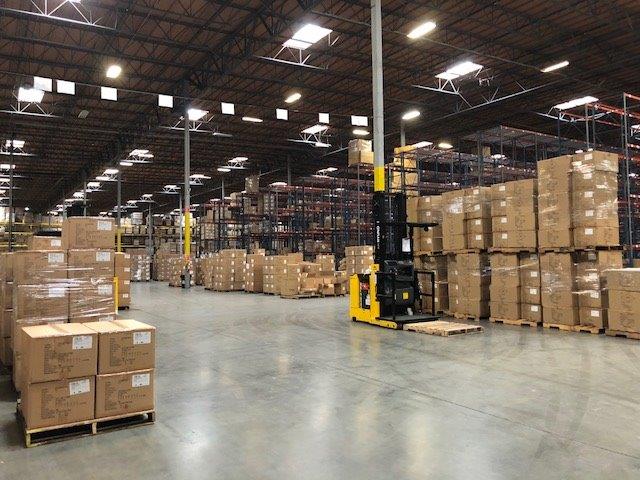
Why direct sourcing of logistics infrastructure from China guarantees long-term operational success.
Direct integration with Chinese manufacturing corridors provides Lesotho's enterprise operators with unparalleled capital-expenditure (CAPEX) advantages. By sourcing directly from Shenzhen, logistics hubs bypass middle-tier markups and gain direct access to customized mechanical and electrical engineering. This pipeline guarantees that custom cargo weights, regional barcode compatibility (such as Code 128, PDF417, and QR variations commonly used by regional South African post agents), and localized voltage standards are built into the hardware at the factory level.
Furthermore, China's component supply chain ecosystem ensures a highly resilient spare-parts cycle. High-speed belt conveyor rollers, high-resolution line-scan camera modules, and precision load cells are manufactured with standardized global configurations. This means that long-term maintenance cycles for installations in Lesotho remain secure, preventing prolonged system down-times due to localized parts shortages.
In addition to physical hardware resilience, the software backend of modern Chinese sorting machinery is engineered on open APIs. This design structure allows seamless compatibility with localized Southern African Warehouse Management Systems (WMS) and Enterprise Resource Planning (ERP) frameworks. Whether coordinating with regional South African delivery portals or domestic Lesotho postal databases, our systems enable instant handshakes via RESTful APIs and TCP/IP data protocols, minimizing integration overheads.
Adapting to smart border corridors and IoT-driven tracking ecosystems.
Deployment of on-board AI computing chips directly within DWS camera units to decipher damaged, smudged, or irregular shipping labels typical of cross-border long-haul transits.
Adoption of variable-frequency conveyor motor arrays that only activate when photo-sensors detect approaching parcels, drastically lowering facility electricity bills in power-sensitive areas.
Developing direct cloud pipelines linking warehouse cargo dimensions and weights with SACU customs platforms to facilitate pre-arrival clearance and green-channel passage.
Essential security, storage, and mounting systems for comprehensive customs and warehouse environments.
Ensuring complete alignment with South African transit treaties and regional safety norms.
Operating a logistics facility in Lesotho requires strict adherence to international and regional frameworks. Specifically, our export systems are calibrated to align with South African Revenue Service (SARS) border declarations and the Lesotho Revenue Authority (LRA) custom compliance frameworks. Correctly declaring parcel parameters (precise dimensions and metric weights) prevents heavy administrative fines and cargo seizure during border crossings.
Furthermore, because our facilities are customized for the region, they feature robust surge protection. The localized Southern African electrical grid can experience supply instabilities; therefore, our control cabinets are pre-wired with industrial-grade voltage stabilizers and uninterruptible power supplies (UPS). This safeguards optical sensors, laser measurement units, and PLC memory logs from data corruption during power interruptions.
For after-sales service, our technical support desk provides 24/7 remote diagnostic support. By utilizing secure VPN connections directly to WCS (Warehouse Control System) layers, our engineers in Shenzhen can troubleshoot, recalibrate cameras, and update scanning algorithms remotely. For on-ground deployment, we work with localized engineering teams to provide rapid-response on-site support and maintenance audits across all major industrial parks in Lesotho.
Our systems carry international weight metrology certifications, ensuring your cargo scans are legally binding and valid for tariff assessments at border checkpoints.
Explore our diverse lineup of heavy-duty racks, smart dimensioning tools, and integration packages.
Expert technical answers addressing integration, installation, and compliance in Southern Africa.
 StudioWare Logistics