Shenzhen StudioWare Logistics Co., Ltd. is a professional international logistics and supply chain service provider specializing in cross-border logistics, express delivery services, air freight, sea freight, and global supply chain solutions. The company is committed to offering efficient, reliable, and cost-effective transportation services for global trade between China and international markets. Operating as a critical link for West African infrastructure, StudioWare Logistics customizes heavy-lift and out-of-gauge logistics specifically tailored to the unique terrain and regulatory framework of Equatorial Guinea.
Equatorial Guinea, located in Central Africa, features a unique split between its insular region (Bioko Island, housing the capital Malabo) and Rio Muni on the mainland (with the major economic hub of Bata). Over the past three decades, the nation has established itself as one of Sub-Saharan Africa’s primary oil and gas producers, driving an extensive demand for heavy industrial imports. The development of fields such as the Zafiro, Alba, and Ceiba projects has created a constant requirement for massive machinery, oilfield drills, gas processing turbines, and heavy construction equipment.
Under the national transformation framework—Horizonte 2035—the Equatoguinean government is heavily investing in diversifying the economy away from raw crude extraction. Key focus sectors include processing infrastructure, deepwater port expansions, regional electrical grids, and modernized transportation networks. The construction of the modern Port of Bata and the deepwater capabilities of Luba Freeport on Bioko Island are central to this strategy. These projects require regular international maritime shipments of oversized cargo, structural steel components, and high-capacity earthmoving fleets, making robust project logistics an absolute necessity.
Transporting out-of-gauge (OOG) and heavy-lift cargo to Equatorial Guinea presents complex bureaucratic and physical challenges. Geographically, moving cargo between Malabo and the mainland requires dual maritime and inland clearance procedures. Structurally, the country is a member of the CEMAC (Economic and Monetary Community of Central Africa) customs union, which imposes strict harmonized tariffs, import regulations, and pre-shipment inspections.
Shenzhen StudioWare Logistics ensures seamless localized support by deploying seasoned engineering and customs clearance agents on-site in both Malabo and Bata. We perform comprehensive route surveys to identify low-hanging overhead cables, narrow bridges, and slope grade limitations on mainland roads before your cargo even leaves the Chinese factories.
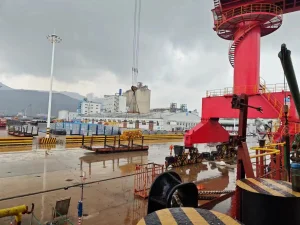
SEO Information Gain Insight: Unlike standard general freight forwarders, specialized project cargo logistics companies operating in West Africa must coordinate directly with the Administración de Puertos de Guinea Ecuatorial (APGE) and local maritime authorities to secure priority berthing, heavy harbor crane usage, and immediate direct-discharge permits to avoid costly demurrage fees.
The manufacturing capabilities of Chinese factories, combined with our global logistics network, provide an unmatched supply chain corridor for Equatorial Guinea's infrastructure projects. As a leading manufacturer and logistics provider, we supply not only transport services but also the specialized steel structures, heavy-duty transport vehicles, and oilfield safety equipment needed at the destination.
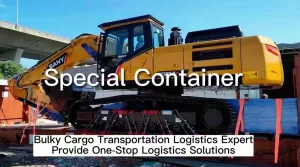
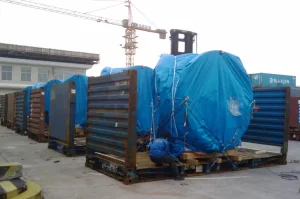
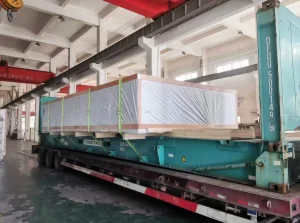
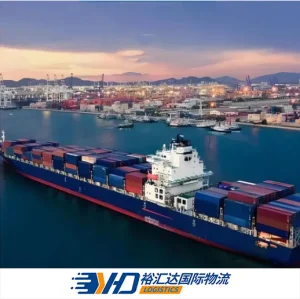
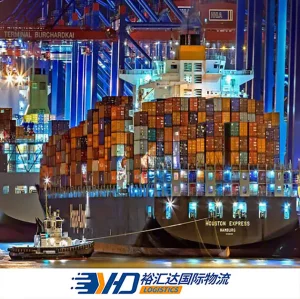
Our direct shipping channels from key Chinese hubs—such as Shenzhen, Guangzhou, Qingdao, Shanghai, and Shekou—allow for optimized transit times. Depending on the size of the cargo, we utilize specialized container configurations (such as Flat Racks and Open Tops) or dedicated breakbulk and Roll-on/Roll-off (RoRo) vessels. By utilizing direct shipping lanes, we eliminate the need for high-risk transshipments in European or other African hubs, reducing risk and total transit time by up to 15 days.
Our logistics network utilizes key coastal gateways in China to optimize shipping routes:

Heavy lift transportation is not merely a logistics service; it is an engineering discipline. When transporting oversized cargo—such as heavy oil refinery vessels, turbine generators, or mining haul trucks—our engineering teams calculate force distributions, center of gravity offsets, and lashing angles to withstand the physical forces experienced during ocean voyages and rough overland roads in Central Africa.
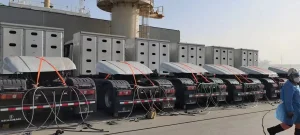
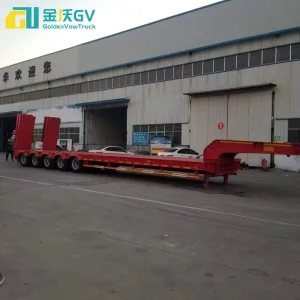
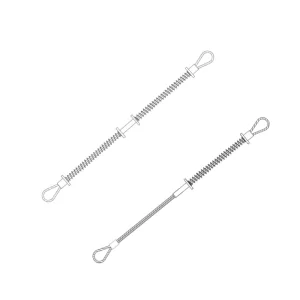
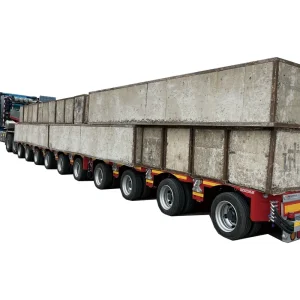
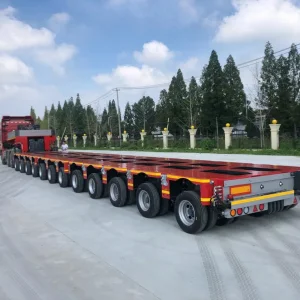
We supply and operate state-of-the-art heavy transport equipment, including extendable low-bed trailers and hydraulic modular trailers (SPMTs), designed to navigate steep grades and tight clearances. Furthermore, safety during fluid and gas operations at oilfields is enhanced by our high-grade safety whipcheck hose restraints, manufactured in our certified facilities to prevent catastrophic whip injuries in high-pressure environments.

Procuring and shipping heavy industrial equipment to developing markets requires thorough risk assessment. In the Gulf of Guinea, logistical bottlenecks are often caused by bureaucratic clearance delays and environmental challenges rather than ocean transit times. Standard marine insurance policies rarely cover transit delays or regional environmental risks, making the choice of freight forwarding partner a critical risk-management decision.
Modern procurement strategies focus on consolidated solutions. By partnering with a provider that integrates manufacturing, transport planning, and customs clearance, enterprises reduce operational friction. Shenzhen StudioWare Logistics acts as an single-contact logistics provider, conducting feasibility studies and coordinating with local agencies to ensure your cargo complies with all regional safety and transport standards.
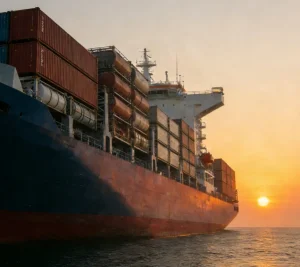
Generally, ocean transit times from main Chinese ports (Qingdao, Shanghai, Shenzhen) to the Ports of Malabo or Bata range between 35 and 45 days, depending on whether the vessel operates a direct route or transships at key West African hubs.
Required import documentation includes the Bill of Lading (OBL), commercial invoice detailing HS Codes, packing list, a valid BESC (Electronic Cargo Tracking Note) registered in China, and a pre-shipment inspection certificate issued by SGS or Bureau Veritas.
We perform on-site route surveys to check bridge load limits and road geometry. We then design transport plans using hydraulic multi-axle modular trailers, coordinating with the Ministry of Public Works for permits and security escorts.
Yes, Shenzhen StudioWare Logistics provides continuous tracking and status updates throughout ocean transit, keeping you informed at every stage of the shipment.

 StudioWare Logistics