Why Is Supply Chain Efficiency Important in Global Trade?

Time:2026-11-24 Author:Oliver
0%

Global trade links factories, ports, warehouses, and customers across long distances. A delayed container in Singapore can leave a European retailer short of stock, even when production is on schedule. These disruptions show why is supply chain efficiency important in global trade: it helps businesses move goods reliably, control costs, and respond when plans change. It matters.

Efficiency is not simply about shipping faster or holding less inventory. Businesses can track lead times, on-time delivery, inventory turnover, and total landed costs to spot bottlenecks and compare performance. Clear supplier communication and accurate demand forecasts also help teams prepare for seasonal peaks and transport delays. Small improvements count.

A more efficient network can reduce wasted storage, unnecessary handling, and avoidable fuel use. It can also give customers clearer delivery expectations. But cutting every buffer is not always wise. A lean plan may look convincing on a spreadsheet, then struggle when a port closes or demand suddenly rises. That tension deserves attention. Resilience and efficiency must be considered together.

This article explores the practical value of efficient supply chains in international commerce. It examines cost, delivery reliability, visibility, and risk management, while recognizing that results vary by product, route, and business size. No single system fits every company. The goal is not perfection, but better-informed decisions and dependable movement of goods.
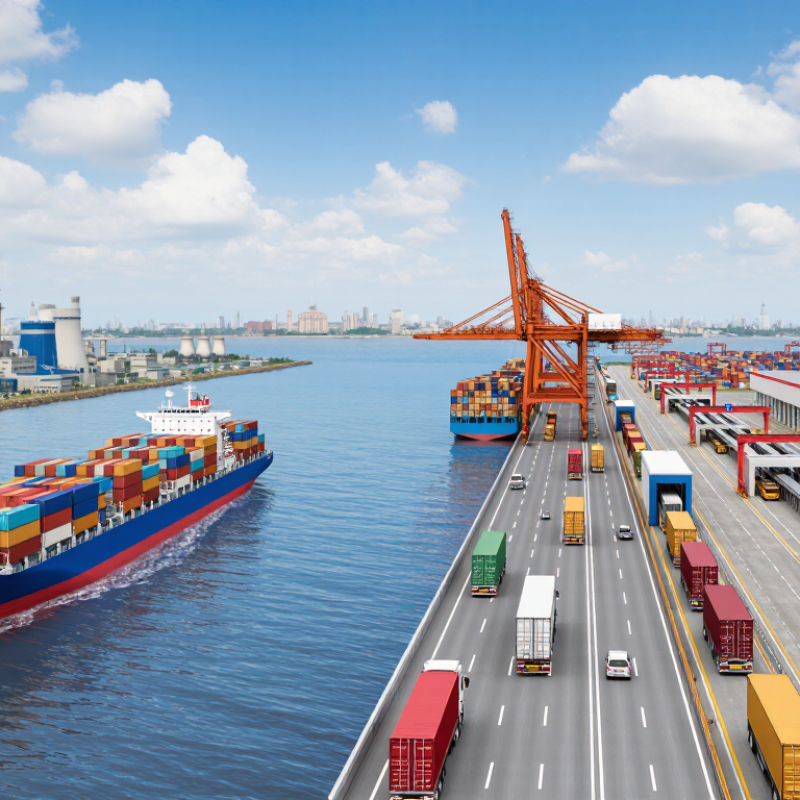
Why Is Supply Chain Efficiency Important in Global Trade?

How Supply Chains Link Producers, Transport Networks, Customs, and Markets

A supply chain is more than a route from factory to customer. It links producers, ports, roads, customs agencies, warehouses, and buyers through shared schedules and information. A late component can leave a production line idle; a missed vessel can keep finished goods waiting at a port. The consequences travel. UNCTAD’s Review of Maritime Transport 2024 notes that shipping carries over 80% of world merchandise trade by volume, making reliable connections to ports essential.

Customs is another critical link. Clear, accurate documents help officials assess shipments and release them without avoidable delays. The OECD’s 2018 Trade Facilitation Indicators report estimates that comprehensive implementation of trade facilitation measures could reduce trade costs by 14.3% on average. That potential depends on coordination, not paperwork alone: producers must provide accurate shipment details, carriers must share timely updates, and border agencies need processes that work together. Small delays compound.

Efficiency does not mean speed at any cost. A chain with no buffer may look lean until weather, congestion, or a missing document disrupts it. In practice, teams can track handoffs, check data before dispatch, and keep modest time allowances for critical routes. Not every delay is preventable. The useful question is where one weak link creates the largest knock-on effect for producers and customers.

Why Is Supply Chain Efficiency Important in Global Trade?

How supply chains link producers, transport networks, customs, and markets

Why it matters: Maritime transport connects producers with ports, customs procedures, and overseas markets. Efficient coordination helps goods move through these links with fewer delays.

Source: UNCTAD, Review of Maritime Transport. The bar marks the 80% lower bound; the reported share is more than 80%.

Why Maritime Efficiency Matters: Ships Carry Over 80% of Global Trade by Volume (UNCTAD)

Ships carry more than 80% of global trade by volume, according to UNCTAD’s Review of Maritime Transport 2024. That makes maritime efficiency central to the movement of everyday goods, from grain in bulk holds to containers stacked high above the waterline. UNCTAD reports that maritime trade grew by 2.4% in 2023. When port calls run smoothly, cargo moves sooner and ships spend less time waiting at anchor. That is enormous. A missed berth, however, can disrupt connecting services and leave containers waiting on the quay.

Efficiency is not simply about speed. Predictable schedules help importers plan stock levels and avoid paying to store goods they cannot yet use. The World Bank’s Logistics Performance Index 2023 tracking data found that shipments took an average of 44 days to travel from port of entry to destination, with a 10.5-day standard deviation. Those extra days matter. Still, a faster ship cannot solve every delay: weather, port congestion, and slow transfers between vessels and trucks all affect delivery. One uncomfortable lesson is that better maritime planning depends on accurate cargo forecasts and coordination across the supply chain. Even with improved systems, some delays remain hard to predict.

How Trade Facilitation Pays Off: WTO Estimates 14.3% Lower Trade Costs

Trade facilitation is not just paperwork; it can reduce delays and costs across a supply chain. The WTO estimated that fully implementing its Trade Facilitation Agreement could lower global trade costs by an average of 14.3% (WTO, 2015). This is an estimate, not a guaranteed discount. Customs capacity, border coordination, and shipment type all affect results. For an importer, clearer procedures may mean fewer days of inventory waiting near a port—and less cash tied up in goods.

The stakes are significant. UNCTAD’s Review of Maritime Transport 2024 reports that more than 80% of world trade by volume moves by sea. A missing document can keep a container waiting while truck bookings, warehouse space, and production schedules shift. The WTO also estimated that the agreement could increase global merchandise exports by up to $1 trillion annually. Actual gains depend on implementation. The headline number is impressive; progress is uneven.

Tips: Track clearance time, document errors, and port dwell time for each route. Compare results monthly, and check where delays actually occur. A simpler form may help—but only if agencies and carriers use the same process.

How Efficient Logistics Improve Delivery Speed, Reliability, and Competitiveness

Efficient logistics turn distance into a manageable part of global trade. When a shipment leaves a factory, clear handoffs between carriers, ports, and warehouses help it keep moving. A shared schedule can flag a missed vessel early, giving teams time to adjust rather than discover the delay at delivery. Small delays matter.

Better routing and accurate inventory records can also shorten delivery times. For example, a distributor that knows which cartons are ready can reserve suitable transport before a port becomes congested. Tracking milestones, such as customs clearance and warehouse arrival, helps staff give customers more realistic updates. Speed is useful, but predictable timing often matters just as much.

Reliability depends on preparation, not promises. Teams can compare planned and actual transit times, check recurring bottlenecks, and keep a practical buffer for disruption. Still, forecasts are imperfect. A sudden weather event or demand spike can upset even a careful plan, and extra inventory may raise storage costs. There is no single best route for every shipment. Companies that review their data and communicate delays promptly are better placed to protect customer trust and compete on service, not just price.

How the World Bank’s Logistics Performance Index Measures Supply Chain Efficiency

Supply chain efficiency is more than moving a container quickly. It also depends on predictable border checks, reliable roads, and clear shipment information. The World Bank’s Logistics Performance Index (LPI) compares countries across six areas: customs, infrastructure, international shipments, logistics services, tracking and tracing, and delivery timeliness. Together, these measures show where goods may slow down between a factory and a customer. Small delays add up.

The LPI uses survey responses from logistics professionals familiar with the countries they assess. Their experience helps reveal practical conditions, such as whether a shipment can be tracked or customs paperwork is processed smoothly. A high score can indicate strengths, but it does not guarantee that every route or business faces the same conditions. The index is a broad comparison, not a live reading of each port or border crossing. That distinction is easy to miss. A refrigerated shipment waiting several hours at a congested terminal may face risks that a national score cannot describe. Survey judgments can also reflect uneven experience. The LPI is useful for spotting patterns, though careful readers should pair it with local evidence before making operational decisions.

FAQS

What does a supply chain connect?

It links producers, ports, roads, customs offices, warehouses, and buyers. Shared schedules help each handoff work. One late component can idle a production line.

Why does customs coordination matter?

Clear shipment details help officials assess cargo and release it with fewer avoidable delays. Carriers and producers must share accurate, timely information. Small delays compound.

How much can trade facilitation reduce costs?

Full implementation was estimated to lower global trade costs by 14.3% on average. That is an estimate, not a guaranteed saving. Results vary by route and process.

Why do port delays affect more than shipping?

A container waiting at a port can disrupt truck bookings, warehouse space, and production schedules. Finished goods may sit idle. The effects spread.

Does a faster supply chain always work better?

Not always. A chain with no spare time may struggle with bad weather, congestion, or missing documents. A small buffer can prevent bigger disruptions.

What information should teams track?

Track clearance time, document errors, and port dwell time for each route. Compare results monthly. The numbers may reveal a weak handoff.

How important is sea freight to world trade?

More than 80% of world trade by volume moves by sea. Reliable port connections matter, but a missed vessel can still cause delays.

Can trade facilitation increase exports?

One estimate suggested full implementation could add up to $1 trillion in annual merchandise exports. That figure is striking, but actual gains depend on progress. Estimates need checking against real results.

Conclusion

Supply chains connect producers with transport networks, customs processes, and markets, moving goods from their point of origin to the people and businesses that need them. This is why is supply chain efficiency important in global trade: delays, uncertainty, and unnecessary costs can affect every link in that journey. Maritime transport is especially significant because ships carry more than 80% of global trade by volume, so efficient ports and shipping operations can help goods move smoothly across borders.

Trade facilitation can reduce the time and expense involved in importing and exporting; estimates suggest that simpler, more efficient trade processes can lower trade costs by 14.3%. Effective logistics also support faster, more reliable deliveries, helping businesses serve customers and compete in international markets. Supply chain performance can be assessed through indicators such as the Logistics Performance Index, which considers areas including customs, infrastructure, shipment arrangements, logistics services, tracking, and delivery timeliness.

Oliver

Oliver

Oliver is a seasoned marketing professional with a wealth of expertise in driving brand awareness and engagement. With a deep understanding of our company's product offerings, he consistently delivers high-quality content that enriches our professional blog. His insights not only shed light on......